WEEE Sorting: How AI Is Transforming Recycling
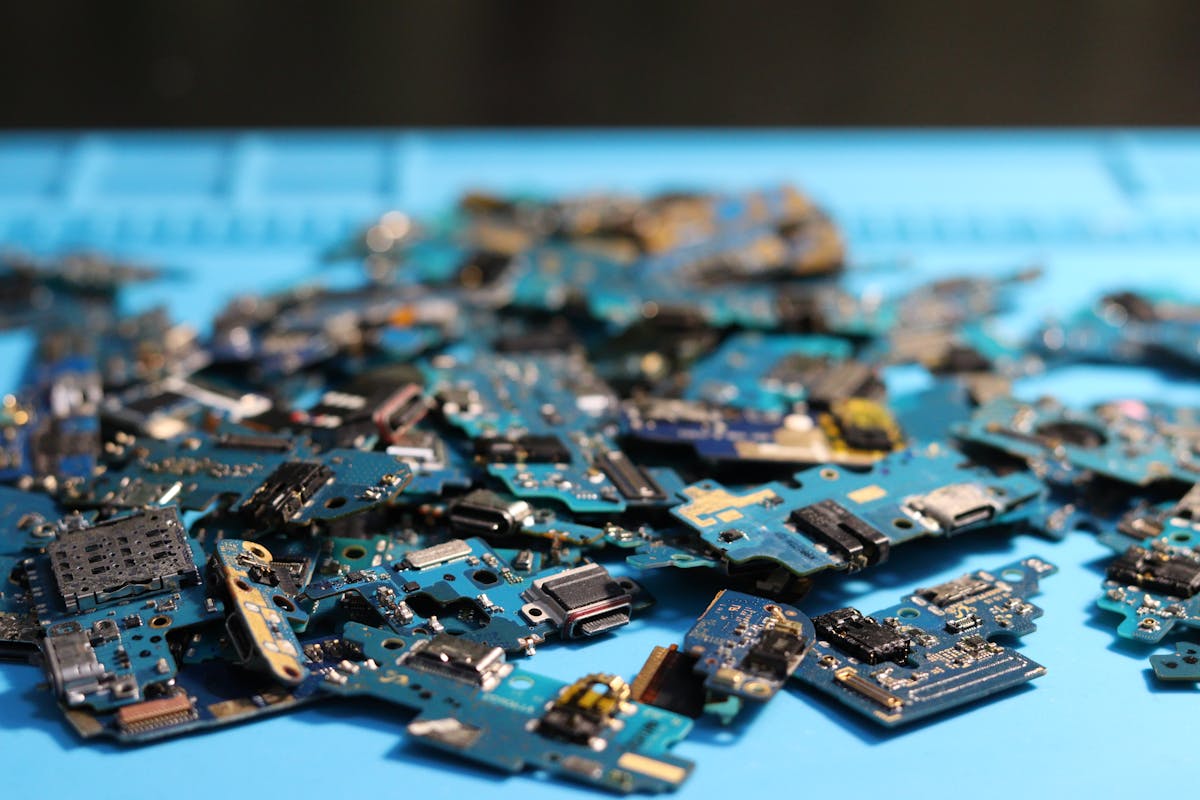
Europe generates approximately 12 million tonnes of electronic waste annually, and that figure is climbing by 3 to 5% each year. The EU’s Waste Electrical and Electronic Equipment (WEEE) Directive sets ambitious recovery targets — 65% by weight of equipment placed on the market, or 85% of WEEE generated — yet many member states consistently fall short. The bottleneck is not collection. It is sorting.
Inside recycling facilities, workers face an overwhelming variety of objects: smartphones and server racks, hair dryers and heat pumps, cables and circuit boards. Each item must be classified into one of six WEEE categories, and the consequences of misclassification ripple through the entire value chain. AI-powered visual guidance is emerging as the critical technology to close the gap between regulatory targets and operational reality.
The Scale of the Sorting Challenge
The WEEE Directive defines six collection categories, ranging from temperature exchange equipment (refrigerators, air conditioners) to small IT and telecommunications equipment (phones, routers). Within each category, items vary enormously in size, shape, condition, and material composition. A single conveyor belt at a busy facility might carry hundreds of distinct product types per hour.
Human sorters, even experienced ones, face cognitive overload. Studies conducted at European recycling plants have documented misclassification rates between 15% and 30% for manual sorting, with error rates climbing during long shifts and when processing mixed WEEE streams. Each misclassified item has downstream consequences: incorrect treatment processes, contamination of material streams, lost recovery value, and non-compliance with reporting obligations.
A single misclassified lithium-ion battery entering a metal shredder can cause a facility fire. In 2023, waste facility fires in Europe caused an estimated €1.2 billion in damages, with battery contamination identified as a leading cause. Accurate sorting is not just a compliance issue — it is a safety imperative.
The financial stakes are equally significant. Precious metals in e-waste — gold, silver, palladium, copper — represent a recoverable value of over €55 billion globally each year, according to the Global E-waste Monitor. But that value is only accessible if items are correctly identified and routed to appropriate recovery processes. A circuit board sent to the wrong stream is value destroyed.
How AI Visual Guidance Works
AI-powered sorting systems use computer vision to identify items on the conveyor belt in real time and provide immediate guidance to human operators. The approach is deliberately collaborative: rather than replacing human sorters with fully automated robotics, these systems augment human judgment with machine perception.
The process follows a consistent pattern:
- Detection: High-resolution cameras mounted above the conveyor capture images of incoming items. Computer vision models — typically based on convolutional neural networks or vision transformers — identify each object and its boundaries.
- Classification: The detected item is classified into the appropriate WEEE category and, in many systems, further sub-classified by product type and material composition. A toaster is identified not just as “small household appliance” but as a specific type containing steel, copper, and plastic in known proportions.
- Guidance: The classification result is displayed to the human operator in real time — through a screen overlay, projected light, or indicator system. The operator sees exactly what the item is and which bin or stream it should enter.
- Verification: The system logs every classification decision, creating a complete audit trail for regulatory reporting and continuous model improvement.
This human-AI collaboration model is central to Neuvana’s Elysium platform. Elysium deploys vision models trained on extensive datasets of WEEE items, providing operators with real-time classification guidance via an intuitive visual interface. The system is designed to integrate with existing conveyor infrastructure — no facility redesign required. Operators retain full control of the sorting decision; the AI ensures they have the information to make that decision correctly.
Measurable Impact on Sorting Accuracy
The performance improvements from AI-assisted sorting are well-documented. Facilities that have deployed visual guidance systems report consistent results:
- Misclassification reduction: Error rates drop from the 15-30% range to below 5%, with some facilities achieving sub-3% misclassification on high-volume categories.
- Throughput increase: Operators sort faster when they spend less cognitive effort on identification. Facilities report 20 to 40% improvements in items processed per hour.
- Training time reduction: New operators reach competency in days rather than weeks, because the AI system provides real-time coaching on every item.
- Compliance confidence: Automated logging produces the detailed classification records that regulators require, eliminating the manual data entry that was previously a major source of reporting errors.
These improvements compound. Higher accuracy means better material recovery, which means higher revenue per tonne processed. Faster throughput means lower per-item processing costs. Reduced training time means lower labor costs and faster scaling.
Meeting the EU’s 2025 Targets and Beyond
The EU’s WEEE Directive targets are not aspirational — they are legally binding. Member states that fail to meet them face infringement proceedings from the European Commission. As of 2024, over a third of EU member states were not meeting the 65% collection and recovery target, according to Eurostat data.
The European Commission’s Circular Economy Action Plan adds further urgency. The plan calls for mandatory recycled content in new electronics, extended producer responsibility schemes with higher financial obligations, and stricter enforcement of existing targets. The direction is clear: the regulatory bar will continue to rise.
For recycling facilities, this means that incremental improvements to manual processes will not be sufficient. The gap between current performance and regulatory requirements demands a step change in sorting capability. AI visual guidance provides that step change — not as a future technology, but as a deployable solution available today.
The Broader Vision: AI Across the Waste Value Chain
Sorting is the immediate application, but the potential extends further. The same computer vision capabilities that classify items on a conveyor can be applied to:
- Intake assessment: Automatically inventorying incoming waste loads, estimating composition, and flagging hazardous items before they enter the processing stream.
- Quality control: Monitoring output streams to verify that sorted materials meet purity specifications required by downstream recyclers and smelters.
- Predictive maintenance: Analyzing wear patterns on sorting equipment and predicting failures before they cause unplanned downtime.
- Yield optimization: Using classification data to dynamically adjust processing parameters — shredder speed, magnetic separation intensity, eddy current settings — for the specific material mix on the belt.
The recycling industry is at an inflection point. Regulatory pressure is increasing, material values are rising, and the volume of e-waste is growing faster than processing capacity. AI does not solve all of these challenges, but it addresses the most critical constraint: the ability to accurately identify and classify the extraordinary diversity of objects that flow through modern recycling facilities.
The technology is ready. The economics are favorable. The regulation demands it. What remains is execution — deploying these systems at the scale the problem requires, in the facilities where they are needed most.