Measuring What Matters: Beyond Foot Traffic Counting
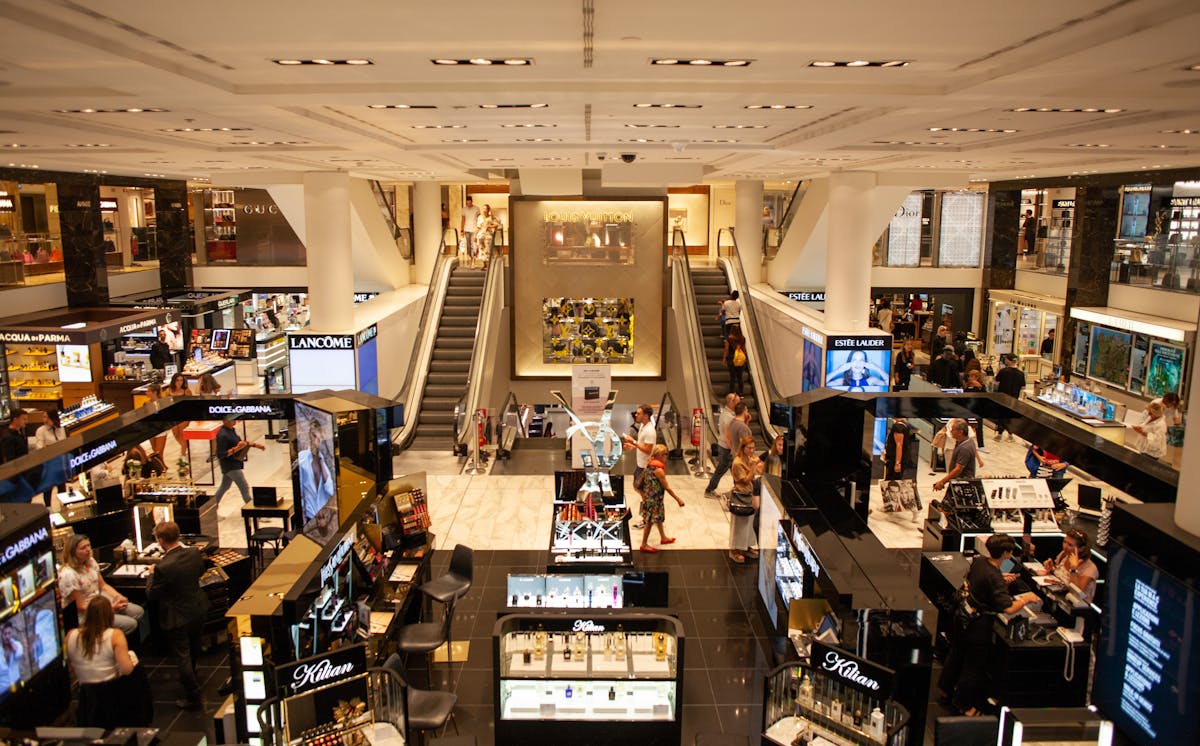
Foot traffic counters were a revelation when they first appeared in retail. For the first time, store operators could answer a basic question: how many people walked through the door? That single number unlocked conversion rate calculations, staffing models, and marketing attribution. But in the years since, the industry has learned a hard lesson — counting bodies is necessary but nowhere near sufficient.
The average retail conversion rate sits between 20% and 40%, depending on the category. That means the majority of visitors leave without buying. A foot traffic counter can tell you how many people entered and how many transactions occurred. It cannot tell you why 60% to 80% of visitors walked out empty-handed. For that, you need to measure what happens between the entrance and the exit.
The Limits of Counting
Foot traffic is a volume metric. It answers “how many” but not “how” or “why.” Two stores with identical daily foot traffic of 1,000 visitors can have radically different performance profiles. One might have high engagement, long dwell times, and a 35% conversion rate. The other might be a pass-through location where most visitors spend under 90 seconds and leave without interacting with merchandise.
Traditional counters — beam-break sensors, thermal counters, basic video analytics — treat every visitor as equivalent. A shopper who spends 20 minutes carefully evaluating products counts the same as someone who enters, glances around, and leaves in 30 seconds. This flattening of behavior into a single number obscures the patterns that matter most to retail operators.
The retail industry has recognized this gap. A growing number of operators now describe foot traffic as a “vanity metric” — useful for benchmarking but insufficient for decision-making.
Dwell Time: The Undervalued Metric
Industry research consistently shows that increasing average dwell time by just one minute correlates with a 20% to 30% increase in purchase probability. Time spent in-store is one of the strongest predictors of conversion available to retailers.
Dwell time — how long a visitor spends in a store or in a specific zone — is among the most predictive metrics in retail analytics. It captures something foot traffic cannot: intent. A visitor who lingers in front of a display, returns to a section, or spends extended time in a fitting room is exhibiting purchase-consideration behavior. A visitor who walks a straight path from entrance to exit is not.
Measuring dwell time at the zone level is even more powerful. Knowing that visitors spend an average of four minutes in the electronics section but only 45 seconds near seasonal displays tells a merchandising team exactly where attention is flowing — and where it is not. This data directly informs layout decisions, display placement, and promotional strategy.
VisionPulse captures dwell time at both the store level and the zone level, using anonymized trajectory analysis that tracks movement patterns without identifying individuals. The result is a heat map of attention: where people linger, where they pass through, and where they stop and engage.
Engagement Patterns and Conversion Paths
Beyond dwell time, the sequence of a visitor’s journey through a store reveals critical insights. Conversion path analysis tracks the common routes visitors take and identifies which paths correlate with purchases.
Consider a home improvement store where data reveals that visitors who move from the inspiration displays near the entrance to the tools section and then to the checkout have a 52% conversion rate — while visitors who go directly to tools and skip the inspiration area convert at only 18%. That pattern suggests the inspiration displays are not decorative; they are a critical part of the purchase journey. Removing or relocating them could measurably harm sales.
This kind of insight is invisible to foot traffic counters and nearly impossible to extract from transaction data alone. It requires understanding spatial behavior: where people go, in what order, and for how long.
- Path frequency analysis identifies the most common visitor routes and highlights unexpected patterns — like a popular shortcut that bypasses a key merchandising zone.
- Conversion correlation maps which paths, zones, and dwell durations are most strongly associated with completed transactions.
- Drop-off detection reveals where in the store visitors disengage — the points where potential buyers become walkaways.
Demographic Insights Without Identity
Modern vision analytics can estimate aggregate demographic patterns — age ranges, gender distribution — without identifying or tracking individuals. This is not facial recognition. It is statistical estimation applied to anonymous, ephemeral data that is processed at the edge and never stored as imagery.
The value is in aggregate trends, not individual profiles. Knowing that a store’s weekday afternoon traffic skews toward 25-to-34-year-old visitors while weekend mornings attract an older demographic allows operators to tailor staffing, music, promotions, and product placement to the audience actually present at each time window.
Privacy is non-negotiable in this space. VisionPulse processes all demographic estimation on-device, retains only statistical summaries, and never captures or stores biometric data. The system is designed to deliver behavioral intelligence while staying well within the boundaries of GDPR, LGPD, and other privacy frameworks.
From Metrics to Decisions
The shift from foot traffic counting to behavioral analytics is ultimately a shift from reporting to decision support. A foot traffic number tells an operator what happened. Dwell time, engagement patterns, conversion paths, and demographic trends tell them what to do about it.
Should the checkout area be repositioned? The data shows where queuing friction causes abandonment. Is a new display working? Dwell time in that zone before and after installation provides a clear answer. Are staffing levels aligned with actual customer engagement patterns? Zone-level traffic by hour reveals whether associates are present when and where shoppers need them.
Retailers that have moved beyond foot traffic counting consistently report that the richer metrics change the nature of internal conversations. Discussions shift from “traffic was up 5% this week” to “dwell time in our highest-margin zone dropped 40 seconds after the layout change, and conversion in that category fell accordingly.” The specificity enables action. And in retail, action is what separates the operators who adapt from those who simply observe.